Most safety toolbox talks fail before they start. They’re too long, too vague, or too repetitive—delivered by someone reading from a script while workers tune out. In high-risk environments, disengagement isn’t just inefficient—it’s dangerous. That’s why short safety toolbox talks, when done right, are among the most powerful tools in safety leadership.
These brief, focused sessions—typically 5 to 10 minutes—aren’t meant to replace comprehensive training. Instead, they reinforce awareness, address immediate risks, and keep safety top of mind. The best ones are timely, relevant, and interactive. They turn passive listeners into active participants.
Let’s break down how to design and deliver short safety toolbox talks that stick—without wasting time or testing patience.
Why Short Toolbox Talks Are More Effective
Long safety meetings often backfire. Attention spans are short, especially before a shift. When content drags, workers disengage, miss critical warnings, or skip future sessions.
Short toolbox talks counter this by:
- Focusing on one specific hazard (e.g., slip risks on wet floors)
- Delivering actionable advice (e.g., “Wipe spills immediately and place cones”)
- Encouraging real-time discussion (“Has anyone seen this happen here?”)
A crew working on a commercial roofing project reduced falls by 40% in three months after introducing daily 7-minute talks on harness anchor points. The change wasn’t due to new gear—it was because the team finally talked about how and where to tie off.
Length isn’t the only factor. Relevance is. A generic talk on PPE won’t land if the crew is about to operate a scissor lift. Short talks succeed when they’re tied to the day’s work, the environment, and real near-misses.
Structure of a High-Impact 5-Minute Safety Talk
You don’t need fancy slides or handouts. You need clarity and connection. Use this simple framework:
1. Hook with a Real Incident (30 seconds) Start with a brief story: “Last week at a site in Denver, a worker slipped on a greasy ladder step. He didn’t fall, but it could’ve been bad.”
This isn’t fear-mongering—it’s grounding the talk in reality. Workers pay attention when they can picture the scenario.
2. Identify the Hazard (1 minute) Be specific: “Today, we’re working on the third-floor mechanical room. There’s oil residue on some tools and floor mats are missing.”
Avoid vague statements like “be careful with equipment.” Name what’s dangerous and why.
3. Demonstrate the Fix (2 minutes) Show, don’t just tell. If possible, pull out the correct tool or walk to the hazard zone.
Example: “This is the right wrench for the hydraulic line. The smaller one strips the bolt—seen it happen twice. Always use the 14mm.”
Have someone else repeat the action. That’s retention.
4. Ask for Input (1.5 minutes) Pose a question: “Where else have you seen oil build-up?” or “What’s one thing we can do today to prevent slips?”
This turns a lecture into a conversation. You’ll often uncover unreported hazards.
5. Close with a Commitment (30 seconds) End with a shared action: “Today, everyone checks their tools before use. I’ll spot-check three stations at lunch.”
Accountability cements behavior.
Common Mistakes That Kill Engagement
Even with good intentions, many short talks fail. Watch for these pitfalls:
- Repeating the same topic weekly – Talking about hard hats every Monday feels like filler. Rotate topics based on work plans and incident trends.
- Reading verbatim from a sheet – Workers hear the tone. If you’re not engaged, they won’t be. Know the key points, but speak naturally.
- Ignoring near-misses – A dropped pipe that didn’t hit anyone is a gift. Use it. “That could’ve been a head injury. Let’s talk rigging checks.”
- No follow-up – If you say “report damaged gloves,” but never check, the message dies. Circle back: “Who turned in a glove yesterday? Thanks, Maria.”
- One-size-fits-all delivery – A talk for electricians on lockout/tagout won’t work for landscapers. Customize or skip.
One supervisor started filming 60-second safety clips with crew members demonstrating best practices. Workers watched more, joked about “starring in the safety reel,” and compliance rose 30% in two months. The tool wasn’t new—it was the delivery.
Practical Examples by Industry
Construction: Working at Height Topic: Secure harness anchor points Talk: “We’re on the east facade today. The steel beam at Grid C5 is the only rated anchor. That pipe you’re eyeing? Not rated. I’ll tag it red—do not use. Who’s double-checking harnesses before ascent?”
Manufacturing: Machine Guarding Topic: Never bypass safety interlocks Talk: “Two weeks ago, someone disabled the press guard to clear a jam faster. Lucky no one was hurt. Today: if the guard’s open, the machine stops. Period. If it’s not working, shut it down and call maintenance—no exceptions.”
Warehousing: Pallet Jack Safety Topic: Load stability and blind corners Talk: “That stack yesterday was 18 inches over the jack’s capacity. It shifted and almost took out the shelving. From now on: if it’s not stable, don’t move it. And slow down at corners—we’ve had three near-hits.”
Landscaping: Equipment Kickback Topic: Chainsaw and trimmer safety Talk: “Grinding into rock with a trimmer? That guard doesn’t stop a ricochet. Always clear debris first. And chainsaws—left hand on front handle, always. Saw a guy lose control last month because he switched grips.”
Each of these takes under 8 minutes. Each addresses a real, immediate risk.
Integrating Toolbox Talks Into Daily Workflow
The best teams don’t treat toolbox talks as a checkbox. They weave them into the rhythm of work.
Timing Matters
- Hold talks before equipment startup, not after roll call.
- Schedule them when the crew is assembled but not rushed.
- Avoid Mondays after long weekends—catch-up chaos kills focus.
Rotate Ownership Have different team members lead weekly. A seasoned electrician runs the talk on conduit bending safety. A newer hire leads on ladder setup.
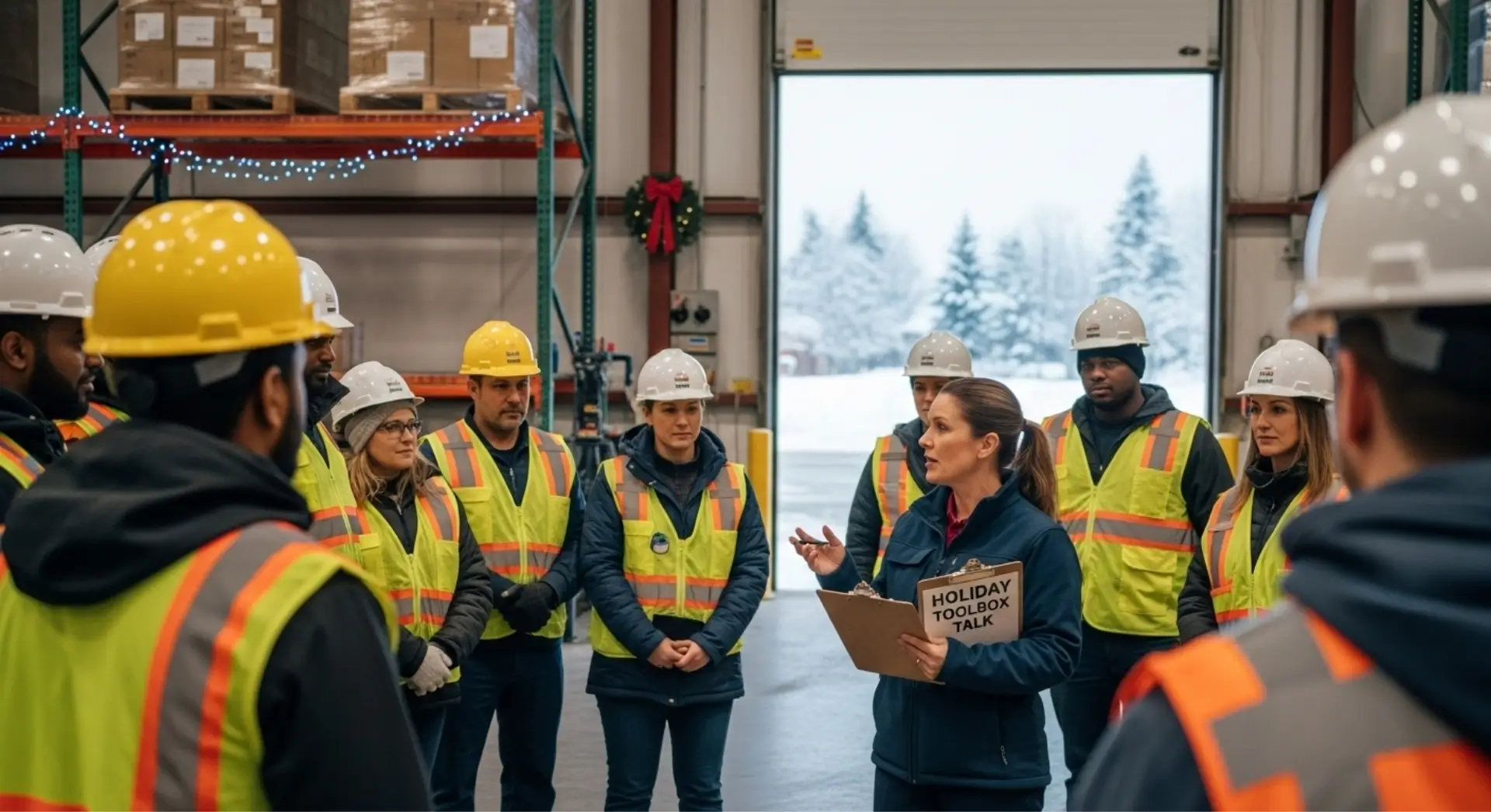
This builds ownership and surfaces diverse perspectives. One junior technician pointed out a blind spot in the forklift path—something supervisors had overlooked for months.
Track and Review Keep a log: date, topic, facilitator, key points. Not for audits—use it to spot patterns.
If you’ve done three talks on trip hazards in a month, maybe you need better housekeeping controls, not more talks.
Tools and Resources to Support Short Talks
While you don’t need software, structured tools help maintain quality and consistency.
| Tool | Purpose | Best For |
|---|---|---|
| SafetyCulture (iAuditor) | Pre-built templates, photo uploads, real-time reporting | Teams wanting digital records and analytics |
| Incident IQ | Custom safety talk modules with sign-off | Larger organizations needing compliance tracking |
| PDF Toolbox Talk Library (OSHA-based) | Printable, no-tech talks on common hazards | Small crews without tech access |
| Slack + Google Docs | Share daily topics and photos quickly | Hybrid teams or remote supervisors |
| Whiteboard + Camera | Sketch hazards, take photo, share | Visual learners and hands-on teams |
Pick one method and stick with it. The tool shouldn’t slow you down.
Making Safety Personal, Not Procedural The most memorable talks connect to people, not policies.
Instead of: “Wear high-vis vests.” Try: “Maria’s daughter asked why Mom wears that bright jacket. Maria said, ‘So my coworkers can see me and go home to their kids too.’ Let’s all wear ours—today and every day.”
Emotion drives behavior more than rules. Share stories. Ask about family. Make safety about people, not just compliance.
Closing: Make the Next Talk Count
Short safety toolbox talks aren’t about filling time. They’re about changing behavior—one conversation at a time.
Tomorrow morning, don’t recycle last week’s talk. Look at today’s work. Spot the risk. Gather the crew. Speak plainly. Ask one question. Demand one action.
Do that consistently, and you won’t just check a box. You’ll build a culture where safety is spoken, seen, and lived.
What should be included in a short safety toolbox talk? A focused hazard, real-world example, clear action steps, team input, and a follow-up commitment. Keep it under 10 minutes and tied to the day’s work.
How often should toolbox talks be held? Ideally, daily or before high-risk tasks. Weekly minimum for low-risk environments. Frequency should match work pace and hazard exposure.
Who should lead a toolbox talk? Supervisors typically lead, but rotating team members increases engagement and surfaces frontline insights.
Can toolbox talks reduce workplace accidents? Yes—when consistent, relevant, and interactive. They reinforce behaviors, uncover hidden risks, and strengthen safety culture.
Are toolbox talks required by OSHA? Not explicitly, but OSHA requires employers to inform workers about hazards. Toolbox talks are a practical way to meet that obligation.
Should toolbox talks be documented? Yes. Written logs or digital records help track topics, identify trends, and support compliance during inspections.
How do you keep toolbox talks from becoming repetitive? Rotate topics based on work plans, near-misses, and worker feedback. Use real incidents and assign different team leaders weekly.
FAQ
What should you look for in Short Safety Toolbox Talks That Actually Work? Focus on relevance, practical value, and how well the solution matches real user intent.
Is Short Safety Toolbox Talks That Actually Work suitable for beginners? That depends on the workflow, but a clear step-by-step approach usually makes it easier to start.
How do you compare options around Short Safety Toolbox Talks That Actually Work? Compare features, trust signals, limitations, pricing, and ease of implementation.
What mistakes should you avoid? Avoid generic choices, weak validation, and decisions based only on marketing claims.
What is the next best step? Shortlist the most relevant options, validate them quickly, and refine from real-world results.